 PetPussyCat
Why Does My Cat Get Zoomies at Night? 8 Common Reasons
Nighttime cat zoomies usually reflect normal activity, stored energy, play, or routine. Learn what triggers them and how to build a quieter evening plan.
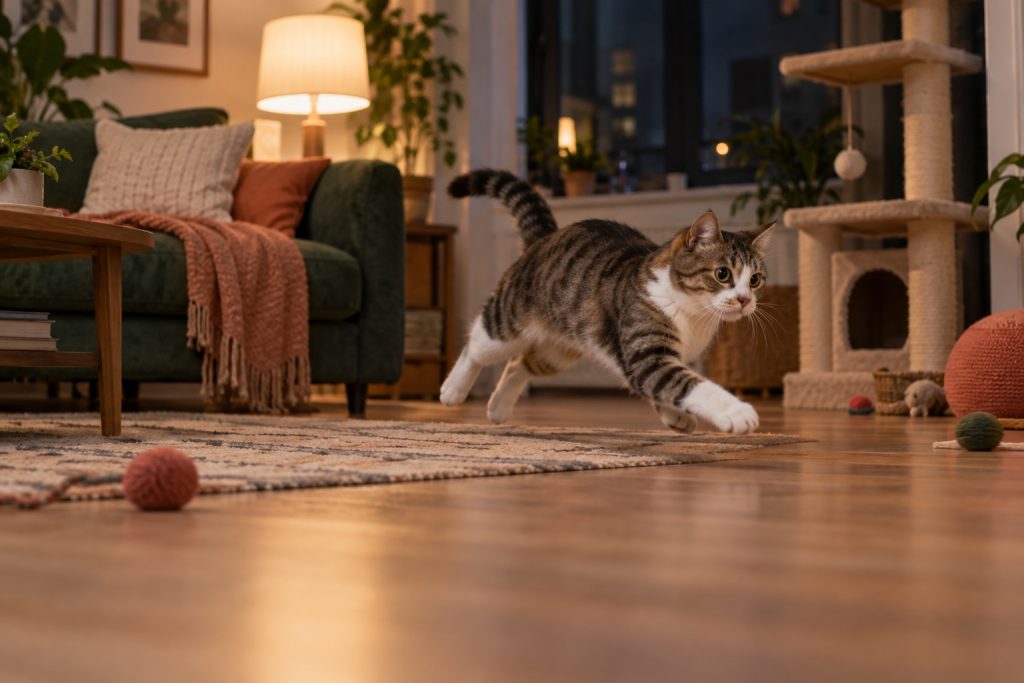
Nighttime zoomies are short bursts of running, jumping, skidding, or chasing that often begin just when the apartment gets quiet. In many healthy cats, this is normal behavior rather than a sign that something is wrong. Cats sleep and wake in multiple periods, and their active times do not always match a human schedule.
The useful question is not simply “How do I stop it?” but “What happens before it, and does my cat have a safe outlet?” A predictable play-and-food routine often reduces disruptive episodes. Sudden, extreme, or distressed activity deserves a veterinary check.
Quick answer
Common triggers include a natural evening activity peak, unused energy, a play or hunting sequence, a predictable household cue, feeding anticipation, or a burst after using the litter box. The best first step is to schedule active play before the usual zoomie time, finish with part of the cat’s normal meal, and make the running route quieter and safer.
1. Your cat’s sleep pattern is different from yours
Cats do not follow one long nighttime sleep period. The Ohio State University Indoor Pet Initiative explains that cats sleep and wake frequently throughout the day and night. That is one reason a cat may be ready to move when a person is winding down.
An evening burst is especially unsurprising after a quiet afternoon. It becomes a household problem when the only available route crosses a sleeping area, includes noisy furniture, or repeatedly wakes people.
2. Energy has accumulated during a quiet day
A cat that spends much of the day sleeping may have few opportunities to climb, stalk, chase, and solve small problems. The result can be a high-intensity burst after work or at bedtime.
Do not try to exhaust the cat in one marathon session. Two or three short play periods are usually easier to sustain. Even five focused minutes at lunchtime and ten minutes in the evening can be more useful than leaving the same toys on the floor all week.
For a broader activity audit, see our guide to keeping an indoor cat active in a small apartment.
3. Zoomies can complete a play-and-hunt sequence
Stalking, chasing, pouncing, and grabbing are normal parts of feline play. A cat may sprint because a moving shadow, toy, insect, or sound has triggered that sequence. Use an interactive wand toy to direct the chase toward a clear, non-slip route. Let the cat catch the toy periodically, then slow the movement before ending.
Never use hands or feet as prey. Store string toys after supervised play so they cannot become an ingestion or entanglement hazard.
4. The household routine has become a cue
Cats notice repeated sequences: the television turns off, dishes are washed, lights dim, and a person walks toward the bedroom. If zoomies reliably follow those signals, the behavior may be attached to the routine itself.
Change what the cue predicts. Start play 20 to 30 minutes before the usual burst, then offer a small portion of the cat’s daily food in a puzzle feeder. The new sequence becomes activity, food, grooming, and rest rather than lights out followed by an improvised racetrack.
5. Food anticipation can increase activity
Some cats become active before breakfast or another predictable meal. If the running happens at nearly the same time every night, review feeding times and total daily intake with your veterinarian rather than adding unmeasured snacks.
An automatic feeder can separate the caregiver from an early-morning food request. Use only food already included in the cat’s daily allowance.
6. A litter-box visit may precede the sprint
Some cats dash away after urinating or defecating. An occasional post-litter sprint in a cat that otherwise appears comfortable may not be concerning. Pay attention to straining, repeated trips, vocalizing, blood, diarrhea, constipation, or avoiding the box. Those signs require prompt veterinary advice rather than a behavior plan.
7. Excitement or stress can look like extra energy
Visitors, construction noise, a new pet, a move, or another cat visible outside can raise arousal. Look at body language. Loose movement and playful turns differ from flattened ears, a tucked posture, persistent hiding, growling, or frantic escape attempts.
If hallway activity is the trigger, our guide to a cat meowing at the apartment door at night offers a trigger log and seven-night reset plan.
8. A sudden change can have a medical cause
Contact a veterinarian when nighttime activity begins suddenly, becomes intense, or arrives with weight loss, increased hunger or thirst, vomiting, pain, litter-box changes, disorientation, or unusual vocalization. Older cats with new nighttime behavior deserve particular attention.
A 20-minute quieter-evening routine
| Time | Activity | Purpose |
|---|---|---|
| 0–3 minutes | Slow stalking game | Builds focus without immediate over-arousal |
| 3–12 minutes | Short chase and pounce cycles | Provides an appropriate outlet for active play |
| 12–15 minutes | Slower catches and cool-down | Signals that the game is ending |
| 15–20 minutes | Small meal or puzzle feeder | Completes a predictable activity-and-food sequence |
Begin before the normal zoomie window. Adjust intensity to the cat’s age, mobility, breathing, and interest.
Make a small apartment safer and quieter
- Put washable runners on slippery sprint paths.
- Move lightweight objects that rattle or fall.
- Keep nighttime routes away from shared bedroom walls when possible.
- Offer a stable perch and a sturdy scratcher outside the sleeping area.
- Store hard rolling toys overnight and provide quieter alternatives.
- Never block access to water or the litter box.
What not to do
- Do not chase, shout, spray water, or use startling devices.
- Do not reward every nighttime burst with an exciting new game.
- Do not assume all running is “bad behavior.”
- Do not force intense exercise on an older, overweight, painful, or breathless cat.
Frequently asked questions
Are cats nocturnal?
It is more accurate to say that cats have a sleep-and-wake pattern unlike ours and may be active around dawn, dusk, and at several points overnight. Individual routines vary.
Will my cat grow out of nighttime zoomies?
Kittens and young cats often have more intense play bursts, but adult cats also run at night. A better activity schedule can help at any age.
Should I feed my cat immediately after play?
A small amount from the normal daily food allowance can create a useful play-food-rest routine. Ask your veterinarian about calories or feeding changes for your cat.
Sources and further reading
- Ohio State University Indoor Pet Initiative: Sleeping Habits
- Ohio State University Indoor Pet Initiative: Increasing Activity
- FelineVMA: Meeting the Physical and Emotional Needs of Indoor Cats
PetPussyCat provides educational information, not veterinary diagnosis or treatment. Contact a veterinarian about sudden behavior changes or health concerns.