 PetPussyCat
How to Stop a Cat Scratching the Bedroom Door at Night
A cat scratching the bedroom door at night may want access, attention, activity, or a scratch surface. Use this humane seven-step plan to reduce it.
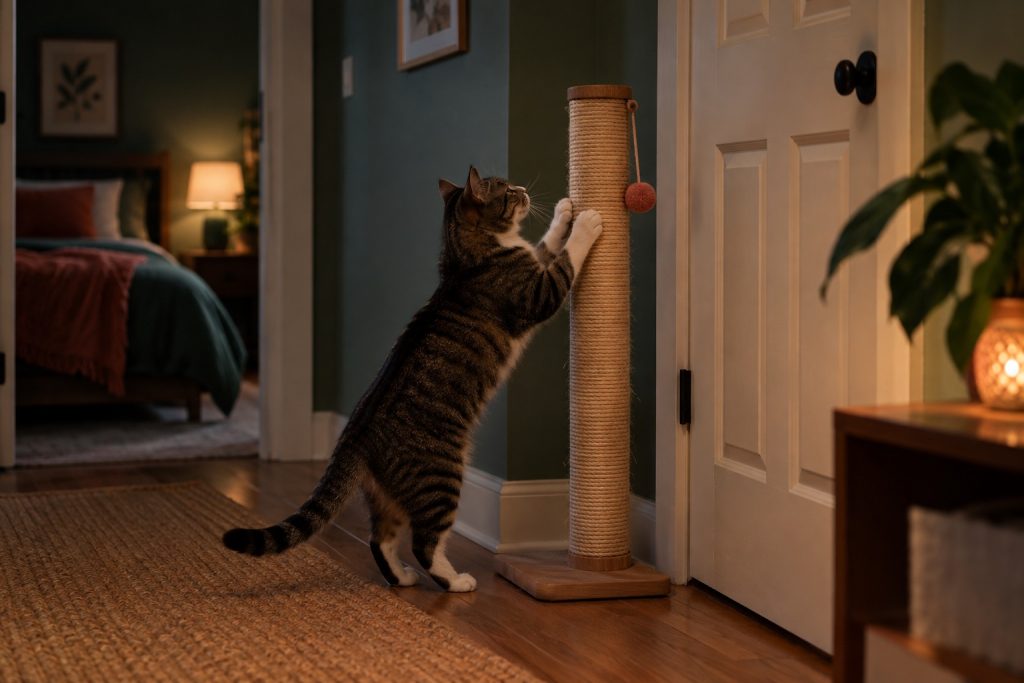
A cat scratching the bedroom door at night is usually communicating or performing a normal scratch behavior in the wrong place. The cat may want access to a person, expect food or play, react to a closed-door routine, or simply like the door’s texture and location.
The solution is not to eliminate scratching—cats need to scratch. Instead, identify what the behavior achieves, provide a better surface and nighttime routine, and make every person in the home respond consistently.
First, identify what the scratching does
Keep notes for three nights:
- What time does scratching begin?
- What happened immediately beforehand?
- Does the cat meow, pace, or lead you somewhere when the door opens?
- Does scratching stop after food, play, access, or attention?
- Is the behavior new or accompanied by health changes?
If opening the door, talking, or feeding follows the scratching, those outcomes may be maintaining it. If scratching happens even when the door is open, surface preference or general activity may matter more.
1. Meet essential needs before treating it as a habit
Confirm that the cat has overnight access to clean water, an appropriate litter box, a comfortable resting place, and a safe temperature. Sudden vocalization, agitation, repeated litter-box trips, appetite changes, or pain signs require veterinary advice.
Do not ignore a cat until you have checked these basics.
2. Decide on a consistent bedroom-access rule
The most confusing pattern is a door that opens after five minutes one night and 30 minutes the next. That teaches persistence.
Choose a realistic household rule. If the cat will sleep outside the bedroom, begin the routine before bedtime and keep the door closed consistently. If the cat is allowed in, teach a calm entry routine rather than opening the door in direct response to scratching.
Expect behavior to become temporarily more persistent when a previously rewarded response stops. This is not a reason to frighten or punish the cat; it is a reason to make sure everyone follows the same plan.
3. Place the right scratcher in the right location
The ASPCA recommends providing attractive scratching surfaces rather than trying to stop scratching altogether. Offer a stable post tall enough for a full stretch, plus a horizontal cardboard option if you do not know the cat’s preference.
Location matters. Put the preferred scratcher near the bedroom door at first, but far enough away that using it does not rattle the door. Reward daytime investigation and use. Once the cat reliably chooses it, move it gradually toward a quieter long-term location if needed.
Never hold the cat’s paws against the post.
4. Build an evening play-food-rest sequence
Schedule 10 to 15 minutes of interactive play before the usual scratching time. Use short stalking and chase cycles, allow successful catches, then slow down. Finish with a small portion of the normal daily food allowance or a quiet puzzle feeder outside the bedroom.
If your cat also runs through the apartment, see why cats get zoomies at night.
5. Reward a quiet alternative during the day
Place a mat, bed, or perch outside the bedroom. During short daytime sessions:
- Reward the cat for approaching the station.
- Reward standing or sitting on it.
- Add a short cue such as “bed.”
- Gradually increase quiet time before the reward.
Practice when everyone is awake. A new behavior rarely succeeds for the first time at 2 a.m.
6. Protect the door without frightening the cat
Temporary protection can reduce noise and damage while training develops. Use a securely attached smooth guard designed for doors, or protect the lower surface with a removable material that cannot be chewed or trapped around paws. Check all adhesive products on an inconspicuous area and follow building rules.
Avoid motion alarms, shouting, water spraying, essential oils, and homemade chemical deterrents. Some substances marketed as natural can be unsafe for cats, and startling methods can increase anxiety.
7. Remove accidental nighttime rewards
Once you know the cat is safe and essential needs are met, keep nighttime responses boring and consistent. Do not start a play session, serve breakfast early, or hold a conversation through the door immediately after scratching.
Reward calm behavior at the station, ideally before scratching starts. If early breakfast is the main trigger, a timed feeder may separate food delivery from the sleeping person.
A seven-night reset
| Night | Change |
|---|---|
| 1 | Record triggers and check health and resources |
| 2 | Install a stable preferred scratcher near the door |
| 3 | Begin play and food before the usual scratching time |
| 4 | Practice the mat or perch behavior before bedtime |
| 5 | Add safe temporary door protection and quiet the area |
| 6 | Confirm every household member follows the same rule |
| 7 | Compare start time, duration, and intensity with Night 1 |
Improvement may be gradual. Measure whether episodes start later, end sooner, or become less intense instead of expecting instant silence.
If the cat is scratching the apartment entrance
An entrance door adds hallway sound, scent, and escape risk. Do not open it to reward scratching. Use the trigger log in our guide to a cat meowing at the apartment door at night and keep enrichment away from the exit.
When to contact a veterinarian or behavior professional
Get help when scratching or vocalizing is sudden, frantic, escalating, or associated with appetite, thirst, weight, mobility, sleep, or litter-box changes. A qualified feline behavior professional can also help when fear, separation distress, inter-cat conflict, or aggression is involved.
Frequently asked questions
Should I put the scratching post directly against the door?
Place it close enough to match the chosen location but not where scratching makes the door vibrate. A heavy base is essential.
Can I use double-sided tape?
Some commercial furniture-protection products use a sticky surface, but door finishes and cat responses vary. Follow the manufacturer’s directions, monitor the cat, and provide an attractive scratcher beside the protected area.
Should I let the cat cry it out?
First rule out unmet needs, illness, stress, and access problems. After that, avoid reinforcing scratching with inconsistent rewards and actively teach a calm alternative.
Sources and further reading
- ASPCA: Destructive Scratching
- FelineVMA: It’s Natural for Cats to Scratch
- FelineVMA: Meeting the Physical and Emotional Needs of Indoor Cats
PetPussyCat provides educational information, not veterinary diagnosis or treatment. Contact a veterinarian about sudden behavior changes or health concerns.