 PetPussyCat
How to Stop a Cat From Running Out the Front Door
Stop a cat from running out the front door with a safer apartment exit routine, a calm station behavior, and a practical training plan.
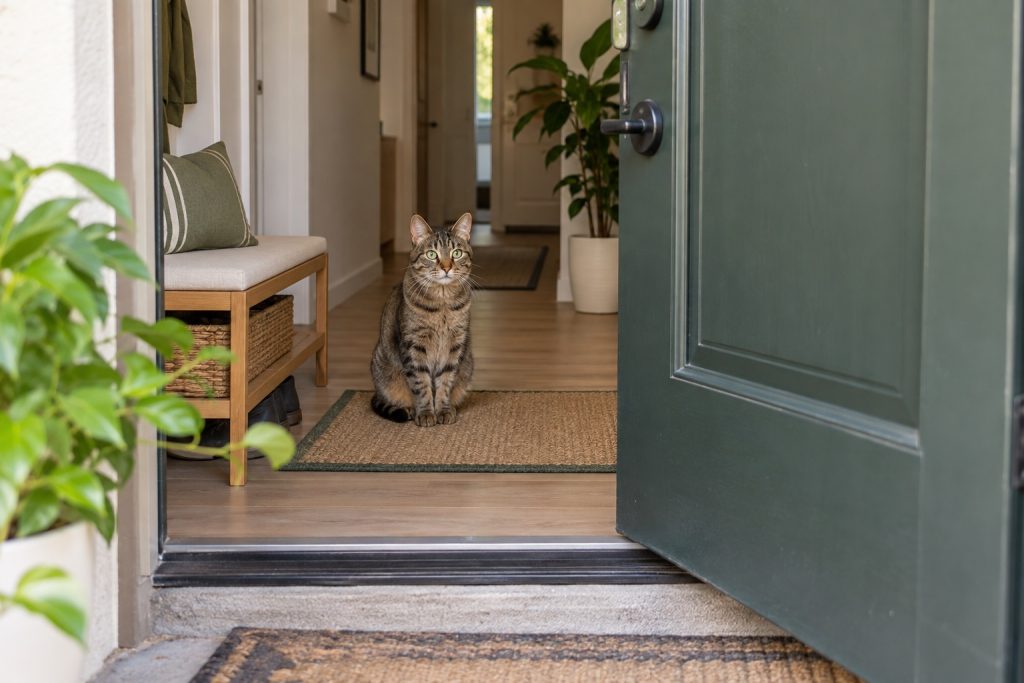
A cat that rushes the front door needs management before training. In an apartment, one successful dash can place the cat in a busy corridor, stairwell, elevator, or building exit within seconds. The safest plan creates distance from the threshold, prevents practice during high-risk moments, and teaches a rewarding place to wait.
Do not depend on shouting, spraying water, or grabbing at the last second. Those responses can make the doorway more intense without teaching the cat what to do instead.
The quick answer
To stop a cat from running out the front door:
- Use a closed room or secure carrier for deliveries and other unpredictable openings.
- Create a second boundary inside the apartment when the layout allows it.
- Teach the cat to go to a mat or perch located well away from the door.
- Practice door sounds and small openings in short, controlled sessions.
- Reward the waiting position before touching the handle.
- Make sure microchip and identification details are current.
- Increase safe indoor exploration, play, and observation opportunities.
Why cats rush apartment doors
Door darting can have several functions. The corridor may deliver new smells and sounds. Your arrival may predict food or attention. A previously outdoor cat may be looking for access. Some cats simply learn that keys, shoes, or a moving handle predict a brief chance to explore.
Watch the complete sequence for three days. Record who opens the door, what happens immediately before the rush, where the cat looks, and what follows. A cat focused on hallway sounds needs a different plan from one who runs toward the person carrying groceries.
If your cat waits and vocalizes rather than crossing the threshold, start with our guide to a cat meowing at the apartment door at night.
1. Prevent another rehearsal
Every successful dash gives the cat more experience with the behavior. Begin with the moments you cannot control safely: parcels, visitors, maintenance workers, rubbish trips, and moving furniture.
Before opening the door, place the cat in a comfortable room with water, litter access when needed, a resting place, and a familiar activity. A secure carrier is appropriate for a brief emergency or building evacuation, but it should not become a routine punishment.
A baby gate or freestanding screen may add distance in some apartments, but it is not escape-proof. Many cats can jump or climb barriers. Treat it as an extra layer, never the only layer.
2. Build a waiting station
Choose a mat, stool, or stable perch six to ten feet from the entry if space permits. The location should let the cat see household activity without sitting in the swing of the door.
Practice while the door stays closed:
- Place a small reward on the station.
- Mark calm contact with a word such as “yes.”
- Deliver the next reward at the station, not near the door.
- Release the cat with a separate cue.
- End after three to five successful repetitions.
Use measured food from the cat’s normal daily allowance, brief play, or calm attention—whichever reward the cat values. The station should predict good things without requiring physical restraint.
3. Add doorway cues gradually
Once the cat readily goes to the station, break the exit routine into small pieces. Pick up keys, put on shoes, touch the handle, turn the handle, open the door one inch, then close it. Reward waiting after each easy step.
Advance only when the cat can remain relaxed. If the cat leaves the station or becomes intensely focused on the gap, make the next repetition easier. Training through a wide-open escape route is not a useful test.
Keep a second adult at the interior boundary for early practice when possible. Never practice when the corridor is busy or the building exit is open.
4. Change the arrival routine
Entering the apartment can be harder than leaving because your hands are occupied and the cat is already excited. Prepare before unlocking the door.
- Pause and listen for the cat near the threshold.
- Open only enough to block the gap with your body and bag.
- Tossing food blindly toward the interior is not ideal; it can teach the cat to hover at the door waiting for the toss.
- Instead, have another household member cue the station, or use a predictable remote activity placed well inside before you return.
- Put groceries down only after the door is fully closed.
If the cat’s main trigger is the sound of neighbors, elevators, or dogs outside, the sensory plan in why cats react after the lights go off can help you map those cues.
5. Make the apartment worth returning to
The Feline Veterinary Medical Association’s indoor-cat guidance describes five essential environmental pillars, including safe places, separated resources, play and predatory behavior, predictable social interaction, and respect for feline senses.
Meeting those needs does not guarantee that a curious cat will ignore an open door, but it reduces the pressure placed on one exciting boundary. Add a secure window view, vertical route, appropriate scratchers, short play sessions, and food-search opportunities. Our small-apartment activity guide provides a room-by-room audit.
Controlled outdoor access may suit some cats, but it requires careful risk assessment. The FelineVMA recommends options such as an enclosure, cat-safe fence, or harness and leash when outdoor access is offered. Hallway roaming is not controlled access: elevators, dogs, cleaners, and opening exterior doors are unpredictable.
6. Prepare for an escape before it happens
The FelineVMA’s indoor/outdoor lifestyle statement recommends microchipping and appropriate visible identification. Confirm that the registry has your current phone number and address. Keep recent photos showing the cat’s face, body, and markings.
If your cat slips into the corridor:
- Close building exits if this can be done safely.
- Ask people to stop moving and give the cat space.
- Do not run, shout, or turn recovery into a chase.
- Open the apartment door and place familiar bedding or a carrier just inside.
- Use a familiar food sound or calm cue if the cat can still respond.
- Contact building staff, local animal services, and your microchip registry promptly if the cat reaches outside or cannot be located.
A frightened cat may bite or scratch. Avoid cornering or grabbing unless immediate danger leaves no safer option.
7. Know when behavior has changed for a medical reason
Arrange veterinary advice when door-focused behavior begins suddenly or arrives with agitation, disorientation, appetite or thirst changes, weight loss, pain, altered sleep, or litter-box changes. New restlessness in an older cat deserves particular attention.
Training should not be used to cover up a welfare or medical problem.
A seven-day doorway plan
| Day | Practice | Goal |
|---|---|---|
| 1 | Map triggers and secure high-risk openings | Stop rehearsals |
| 2 | Reward the station with the door closed | Build value away from the threshold |
| 3 | Add keys and shoes | Make exit cues ordinary |
| 4 | Touch and turn the handle | Maintain a calm wait |
| 5 | Open one inch with a second barrier | Practice safely |
| 6 | Rehearse one calm departure and return | Connect the full sequence |
| 7 | Review weak points and repeat easy steps | Improve reliability, not speed |
This is a starting framework, not a promise that every cat will be reliable around an open exterior door in one week. Continue using physical management whenever the consequence of escape is high.
Frequently asked questions
Should I spray my cat when it approaches the door?
No. Startling may increase fear or make the behavior happen only when you are absent. Create distance, prevent access, and reward a specific waiting place.
Will a baby gate stop a cat from escaping?
Not reliably. It can create useful space, but many cats jump or climb. Use a closed interior door for deliveries and other high-risk situations.
Does my cat need hallway walks?
No. Hallways are shared, unpredictable spaces and may increase interest in the door. If you want to explore controlled outdoor access, discuss health precautions with your veterinarian and use a secure, carefully introduced system.
What if the cat scratches the door while waiting?
Provide an attractive scratching surface in an appropriate location and use the humane plan for bedroom-door scratching. Scratching is a normal behavior that needs a better outlet, not punishment.